Academic, Professional, Technical, Trade, Research Books & Journals
americanpress@flash.net • 617-247-0022 • 75 State Street #100 • Boston, MA 02109
Sport Biomechanics
by JOE D. BELL, TONY GRICE, LINUS J. DOWELL
7th edition, 2013, 346 pages, $41.95
ISBN 978-0-89641-513-3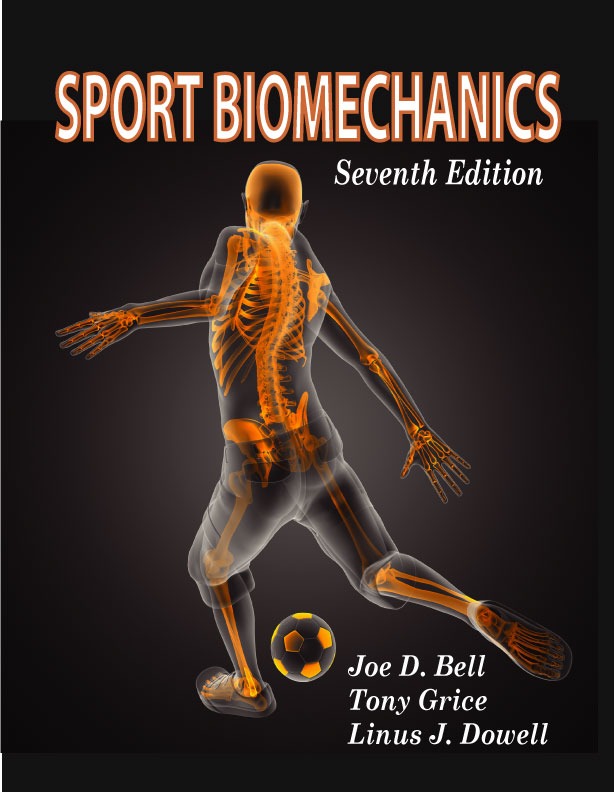
Kinesiology, as it is known in physical education, is the science of human motion. In the early days of physical education, the content of a course in human motion was confined chiefly to functional anatomy and subjective evaluation of movement. gradually, as sports emerged as a amore integral part of the physical education curriculum, the concept of human motion has broadened to include the study of mechanical principles which applied to sport techniques. The principles were applied not only to the movement of the body itself, but also to the movements of the projectiles related to the various sports.
The state of our knowledge in Biomechanics is rapidly growing primarly due to better computer technology. Any growth must, however, have as its base a foundation of laws. theories and principles which are grounded in the study of the mechanical nature of human movement. This textbook is designed with the undergraduate kinesiology major in mind. It is not intended to be the end-all text for graduate studies. We deliberately kept the concepts simple enough to be easily understood by students who tend to have less backgkround in mathematics and physics. The text takes the student through foundational concepts and solutions that could be reached using basic algebra and trigonometry tools.
A great deal of time, experience, and research has gone into the preparation of this book. The authors are gratefully to the many students of kinesiology who have contributed to this work through their athletic prowess, scholarly insight, and research efforts. A special word of thanks goes to the late Dr. Linus Dowell for his initial development of this book and for his active role in much of the research thart went into it. Dr. Dowell will be missed, but fondly remembered, by those who were fortunate enough to sit in his classes and to serve as his colleagues.
CONTENTS
Chapter 1: WHY STUDY THE PRINCIPLES OF SPORT BIOMECHANICS?
Chapter 2: BASIC TOOLS
Square Roots
Percentages; Angles;
Trigonometry
Hand Held Calculators
Practice ProblemsChapter 3: BASIC HUMAN MOVEMENT
Anatomical Structures
Simple Levers
Problems
Exercise
Experiments
Key Terms for Chapter 3Chapter 4: LINEAR MOVEMENT AND PROJECTILES
Problems, Exercises, Experiment, Key TermsChapter 5: STABILITY
Gravity and the Coriolis Effect
Problems, Exercises, Study Questions, Experiment, Key TermsChapter 6: ROTARY OR ANGULAR MOTION
Principles; Problems; Exercises, Study Questions, Experiments, Key TermsChapter 7: FORCE AND FACTORS AFFECTING FORCE
Problems, Exercises, Experiments, Key TermsChapter 8: QUALITATIVE—VISUAL ANALYSIS
Select the Optimal Vantage Point
Simplify the Movement
Establish and Maintain the Correct Body Poisition
Flexibility Should be Maintained throughout the Motion
Mechanical Analysis of Sport Skills
Contributions of Research in the Kinemechanics Laboratory at Texas A&M University to Principles of Mechanics
Study Questions
Selected References of Reserve Studies Completed in the Kinemechanics Laboratory at Texas A&M UniversityChapter 9: QUANTITATIVE MOVEMENT ANALYSIS
History
Biomechanical Analysis of movement
High-Speed Imaging Equipment
Cinematography or Fiom Analysis
Videography or Video Anbalysis
Force Platforms
Study Questions
Key TermsChapter 10: HUMAN GAIT ANALYSIS
The Stance Phase
The Swing Phaase
Kinematics
Exercises
Experiment
Key WordsChapter 11: OTHER FACTORS THAT AFFECT PERFORMANCE
Clothing
Equipment
Anxiety
Strategy
Motivation
Readiness
Talent Identification
Study Questions
References
Key TermsLABORATORY APPLICATIONS
Chapter 12: SKILL TECHNIQUES
Chapter 13: BODY MOVEMENT AND STABILITY
Chapter 14: LINEAR AND ROTARY MOVEMENT
Chapter 15: FORCE AND FACTORS AFFECTING FORCE
Chapter 16: REVIEW WORKSHEET
Chapter 17: COACHING POINTS WORKSHEET
Chapter 18: SPORT ACTIVITY ANALYSIS
Racquetball Serve, Racquetball Backhand, Racquetball Forehand
Badminton Clear
Basketball Layup, Basketball Jump Shot,
Martial Arts Absorbing Shock
Olympic Weight Lifting Clear,
Olympic Weight Lifting Jerk, Olympic Weight Lifting Snatch
Softball Fielding
Gymnastics Front Scale, Gymnastics Head Stand and Hand Stand,
Power Lifting Bench Press, Power Lifting Dead Lift, Power Lifting Squat
Tennis forehand, Tenis Backhand, Tennis Volley, Tennis Two-HandChapter 19: MECHANICAL ANALYSIS
Chapter 20: SKILL ANALYSIS
Chapter 21: GLOSSARY
Chapter 22: MECHANICAL PRINCIPLES
Chapter 23: APPLIED PRINCIPLES
Appendix A: ANSWERS TO CHAPTER PROBLEMS