Academic, Professional, Technical, Trade, Research Books & Journals
americanpress@flash.net • 617-247-0022 • 75 State Street #100 • Boston, MA 02109
Developing Leaders
by DON O'NEAL
1st edition, 174 pages, $19.95
ISBN 978-0-89641-471-6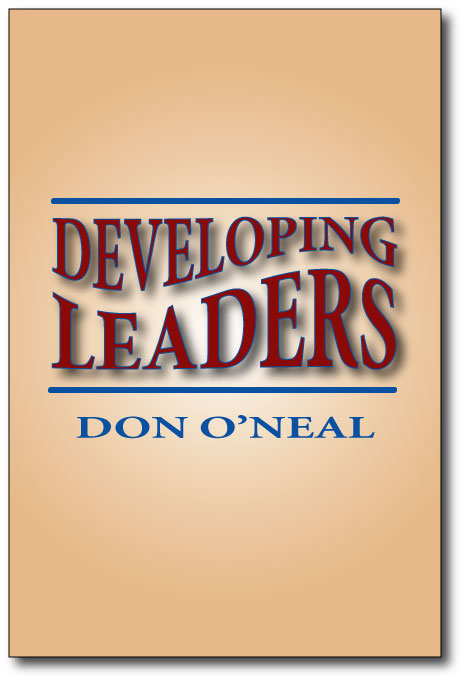
Developing Leaders is written to bridge the gap between the academic world, with its theories of how to lead more effectively, and the world of working managers, professionals, and individuals who can apply those theories in ways that will utilize their time, effort, and resources more efficiently. Unlike most textbooks on leadership, this book discusses ideas and information in contexts that are likely to be more useful to practitioners, and downplays those aspects that tend to be primarily of interest to academics and their graduate students. It is intended to be useful not only as a classroom text but also as an ongoing reference manual for organizational managers and professionals.
Developing Leaders has a dual meaning. On one hand, it refers to what I believe should be the primary purpose of a leader: developing those for whom the leader is responsible, to help them realize their full potential. But before you can hope to be effective leading others, you have to make that sure you, yourself, have developed to the point where you are the kind of example that others will want to follow. Applying the concepts of this book to organizing and directing your own development efforts will help you become that type of leader.
The book has been developed in four parts: Part I Leadership Overview, Part II Self-Leadership, Part III Leading Others, and Part IV Leading into the Future.
Part I—Leadership Overview is a broad overview of leadership, intended to set the context of the chapters and discussions that follow.
The chapters in Part II—Self-Leadership discuss the personal characteristics/traits that are essential to effective leadership.
Part III—Leading Others: Beyond the personal characteristics that are necessary to earn the respect of followers, there are two additional characteristics that are essential for those who intend to lead others: an understanding of people, and the ability to persuade them.
Chapters in Part IV—Leading into the Future, describe elements of leadership that are essential to our ability to lead organizations forward in today’s increasingly-turbulent global environment.
CONTENTS
PART I—LEADERSHIP OVERVIEW
Chapter 1—Introduction to Leadership
Overview, Leadership Theories, The Trail Era, The Behavior Era, The Contingency Era, Leadership and Management, Strategic Thinking, SummaryChapter 2—Leadership Traits
Leadership Characteristics/Traits, Self-Leadership, Leading Others, Charisma, SummaryPART II—SELF-LEADERSHIP
Chapter 3 —Vision
Direction, Meaning, Expectations, SummaryChapter 4—Integrity
Character, Values, Ethics, Credibility, SummaryChapter 5—Self-Development
Self-Awareness, Goals/Expectations, Capabilities, Strengths, Resources, Attitude, Personal Responsibility, Discipline, Development, Evaluation, SummaryChapter 6—Action
Planning, Actions/Activities, Resources, Scheduling, Implementing, Responsibility, Resources, Control, Commitment, Time-Management, Time-Wasters, Time-Savers, SummaryChapter 7—Decisiveness
Decision-Making, Information, Timing, Risk, Intuition, Decision-Makers, Individuals, Organizations, SummaryChapter 8—Courage
Commitment, Sacrifice, Unselfishness, SummaryPART III—LEADING OTHERS
Understanding
Chapter 9—Developing People
Selection, Qualifications, Attitude, Development, Orientation, Training, Career Development, Evaluation, SummaryChapter 10—Delegation/Empowerment
Empowerment, Leadership Factors, Organizational Factors, Delegation, SummaryChapter 11—Communication
Sending, Receiving, Understanding, Questions, SummaryPersuading
Chapter 12—Inspiration
Vision, Persuasion, Example, SummaryChapter 13—Motivation
Needs, Satisfaction, SummaryPART IV—LEADING INTO THE FUTURE
Chapter 14—Cross-Cultural Leadership
Geographic Differences, Administrative Differences, Economic Differences, Cultural Differences, SummaryChapter 15—Leading Change
Resisting Change, Leading Change , SummaryREFERENCES