Academic, Professional, Technical, Trade, Research Books & Journals
americanpress@flash.net • 617-247-0022 • 75 State Street #100 • Boston, MA 02109
People in Organizations:
What Every Manager Should Know about Human Resourcesby DON O'NEAL
1st edition, 220 pages, $19.95
ISBN 978-0-89641-492-1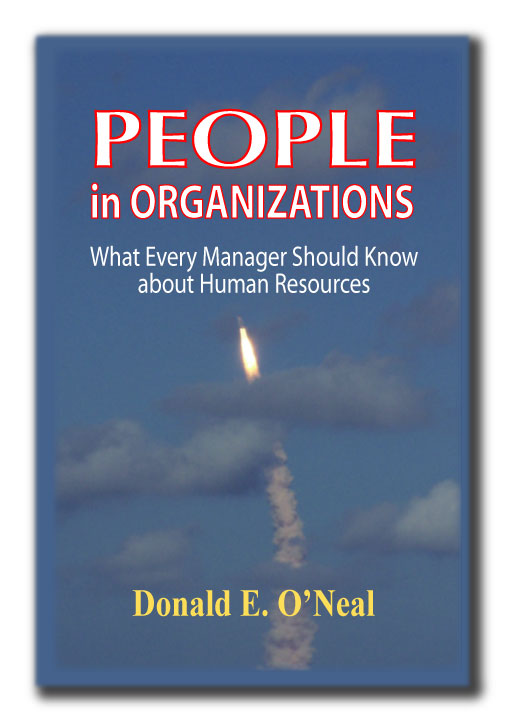
People in Organizations is a synthesis of Dr. O'Neal's own management experience, class notes and personal anecdotes that illustrate human recource concepts. It’s important to note the difference between this book and other human resource textbooks. Whereas most books on the subject are written more for human resource professionals, this one is written for managers and supervisors in all areas, and at all levels in an organization. It was developed as more of a handbook than a textbook—a practical guide to managing people in organizations.
CONTENTS
PART I—INTRODUCTION TO HUMAN RESOURCE MANAGEMENT
1: The Role of Human Resource Management —
Organizations, People, Purpose, Benefits, Summary2: Organizational Strategy and Human Resource Management
3: History of Human Resource Management—
HR1 Helping workers Adjust, HR2 Labor Relations, HR3 Risk Aversion,
HR4 Strategic HRM. Summary- 4: Human Resource Theories—
Type 1 Universal Principles, Type 2 The Social Nature of Organizations,
Type 3 The Contingency Approach, Type 4 The Political Nature of OrganizationPART II—STAFFING
5: Planning
Strategic Planning, Job Design, Staffing Levels, Summary- 6: Rrecruiting—
Internal Recruiting, External Recruiting, Summary
- 7: Selection
Information, Testing, Interviewing, Selection Decision, SummaryPART III—DEVELOPING PEOPLE
8: Orientation—
Purpose, Presentation, Content, Benefits, Summary- 9: Training—
Needs, Types of Training, Learning, Trainers, Summary
10: Career Development—
Responsibility, The Individual, The Organization, Summary11: Performance—
Goals, Evaluating Performance, Improving Performance,
Performance Evaluation Programs, SummaryPART IV—REWARDING PERFORMANCE
12: Compensation—
Compensation Programs, Wage Components, Job Evaluation, Wages , Performance,
Compensation Issues, Government Regulations, Summary13: Incentives—
Motivation, Incentives, Rewards, Needs, Incentive Programs,
Non-Monetary Incentive, Summary14: Benefits—
Benefit Programs, Mandatory Benefits, Discretionary Benefits, SummaryPART V—LEADERSHIP
15: Leadership and Management —
Leadership vs. Management, Self-Awareness, Courage, Delegation/Empowerment,
Strategic Thinking, Summary16: Communication —
Sending, Receiving, Understanding, Questions, Upward Communication, Summary17: The Organization's Atmosphere—
Culture, Social Responsibility, Values, Employee Satisfaction, Summary18: The External Environment —
Opportunities and Threats, Managing the External Environment, Summary19: Moving into the Future —
Change, Leading Change, Downsizing, Future Challenges/Opportunities, Summary- References