Academic, Professional, Technical, Trade, Research Books & Journals
americanpress@flash.net • 617-247-0022 • 75 State Street #100 • Boston, MA 02109
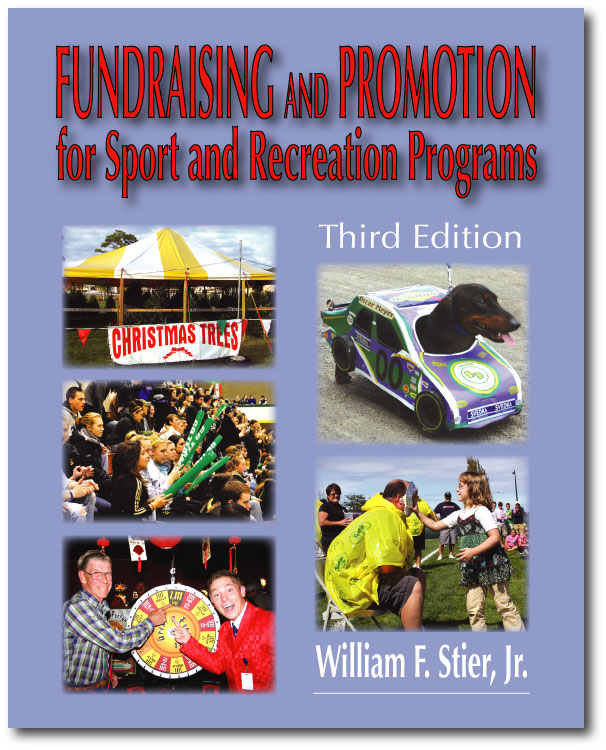
Fundraising and Promotion for Sport and Recreation Programs
by WILLIAM F. STIER, JR.
3rd edition, 344 pages
ISBN 978-0-89641-491-4
$41.95 (Includes shipping)
INTRODUCTION—THE GOAL OF THIS BOOK
The 3rd edition of this book has been written specifically for those who desire to gain a greater insight into the strategies and tactics used in the world of sport and recreation fundraising. The material in this book encompasses three distinct yet related areas (fundraising, promotions and public relations) that almost all administrators and coaches will find themselves involved, to some extent, in almost any sport situation.
The information included within this third edition is based on the practical experience of the author who has had over 35 years of successful experience serving in a variety of managerial and administrative roles, including secondary and college/university athletics director, municipal recreation manager, fitness club manager/director and country club owner/manager.
SPECIAL FEATURES OF THE BOOK
There are a number of unique features presented in this book. The first is the presence of 225 Principles strategically placed throughout all 12 chapters so as to enhance and reinforce the basic tenets of fundraising, promotions and public relations as applied to the world of sports. These principles are presented throughout this book so that they may serve as guidelines for possible action and relate to, and are applicable to, almost any sport or recreation situation, in any community, in which one might find oneself. The principles are based upon both sound administrative and management theory as well as upon successful practical experience in the real world of sport developed and refined over a period of years.
A second unique feature included in this book is the presence of Chapter Highlights that are provided at the beginning of each chapter. These Highlights summarize the essential information found within each chapter. A third unique feature that centers on the Discussion Questions found at the conclusion of each chapter. These questions provide an opportunity for the reader to review one’s knowledge and understanding of the material presented in the chapter. The final unique feature is found in chapter 12 and centers around the presentation of a Fundraising-Planning Template, an important tool in the planning and implementation of any fundraising/promotional project.
It is the author’s hope that readers of this book will (1) develop a sound understanding of the components of the fundraising, promotion, and public relations associated with sport and recreation programs, (2) be able to adapt or borrow ideas and tactics outlined in this book and elsewhere; and, (3) be capable of planning, implementing, and assessing any number of fundraising and promotional projects resulting in increased financial resources as well as genuine enthusiasm and support.
CONTENTS
Chapter 1—Understanding Successful Fundraising, Promotions and Public Relations in the 21st Century—Chapter Highlights, Introduction, Definition of Terms, Fundraising Activities, Promotional Activities, Public Relations, Publicity, Constituencies, Publics, Relationships between Fundraising, Promotions and Public Relations, Promotional, Public Relations and Fundraising Perspectives of Sport, Ingredients of Successful Sport and Recreation Programs, Developing Competencies in Fundraising, Promotions and Public Relations, Graduate Degrees in Fundraising and Philanthropy, Keeping Things in the Proper Perspective, References, Discussion Questions
Chapter 2—Fundamental Elements and Resources of Fundraising and Promotion—Chapter Highlights, Fundamental Processes or Components of Management within Any Organization, Essential Administrative Processes—PPPOSDDCoRRRFEB, Planning, Prioritizing, Problem Solving, Organizing, Staffing, Directing, Decision Making, Coordinating, Reporting, Recording, Risk Taking, Facilitating—Supporting, Evaluating, Budgeting, Resources, Tools, and Assets Available to Support, Fundraising and Promotional Activities, Available Assets and Resources, Available Time (to work), Personnel (internal/external and paid/volunteer), Equipment and Supplies, Facilities, Web Presence and the Internet, Software Applications, Reputation, Image, Status—Level of Competition, Money, Atmosphere, Climate, and Environment, Services, Associates, Other Assets and Resources, Essential Characteristics and Qualifications of Fundraisers, Promoters, and Public Relations Professionals, Basic Skills, Technical Skills, Interpersonal Skills, Conceptual Skills, Commitment and Dedication Skiills, Image Skills, Leadership Skills, Adaptability Skills, Vision Skills, Professionalism Skills, Being a Renaissance Person, References, Discussion Questions
Chapter 3—Booster Clubs and Sport Support Groups—Chapter Highlights,History of American Sport Booster Clubs, Justification for the Existence of Support Organizations—Sport Support Groups, Why Sport and Recreation Programs Need Additional Financial Support, Support Groups for Sport and Recreation Organizations, A Single Support Organization or Multiple Support Organizations?, Challenges to be Faced when Instituting Changes, Creating a Wholesome, Productive Atmosphere within Sport Support Groups (SSGs), Creating and Organizing a Support Group (SSG) or Recreation, Support Group (RSG), A Single Support Group or Multiple Groups—An Important Consideration, Seven Steps in the Establishment of a Quality Support Group, Membership Terms of the Board of Directors and the Corps of Officers, Financial Considerations of Support Groups, Whether to Incorporate or Not—That is the $64,000 Question, Benefits to the Members of the Sport Support Group, Specific Gifts Accruing to Donors Contributing to the Sport, or Recreation Program, Controlling Potential Negative “Outside” Influences, Handling the “Three O’clock Booster Wonders”, References, Discussion Questions
Chapter 4—The Importance of Planning in Fundraising Activities—Chapter Highlights, The Importance of Planning, Appropriate Strategic Planning, Essentials of Planning, The Plan—What It Is and What It Is Not, PIA—Planning in Advance, Initial Steps, Before One Starts—Important Early Decisions to Make, Planning by Means of the Program Evaluation Review Technique, The Ten Commandments of Fundraising, NASPE’s Position Paper—“Implementing Fundraising Project in Public Schools when State Funding is Cut or Nonexistent”, Attempting to Influence Opinions of Others—Use of Centers of Influence, Determination of Needs, Realization of Goals and Objectives, Liability Considerations—Fundraising and Promotional Activities, Risk Management for Preventing Exposure to Negligence Charges, Insurance Considerations—Fundraising and Promotional Activities, Applicable Federal and State Tax Laws—Fundraising and Promotional Activities, Permits, Licenses and Permission, Restrictions on Selling and Distributing, Licensing Transient Retail Merchants, Exemptions from Licenses and Permits, Alcoholic Beverages and Fundraising Projects, Results Orientation, Collecting and Storing Data for Decision Making, Hard Data Collection, Soft Data Collection, References, Discussion Questions
Chapter 5—The Who, What and Why of Fundraising—Chapter Highlights, Philanthropic Activities, Problems with Would-Be Charitable Requests, Determining the Percentage of Money Raised to Actually Go to the Worthy Cause, Corporate Giving, Sources of Charitable Contributions, Contributions to Educational Institutions, Using Grants as a Funding Source, Types of Donations, Timing of Fundraising Efforts, One-Time Events, Repeatable Activities, The Annual Event, Categories or Vehicles of Giving, Endowments Provide for Long-Term Support, Deferred/Planned Giving Programs, Deferred/Planned Giving Programs—Proceeds from Life Insurance, Who Contributes, Facts to be Considered in Soliciting Support, Known Characteristics of Givers (Briggs, 19834; Cole 2000), Why People Contribute, Advantages to Advertisers, Contributors, Supporters and Sponsors, “Guilt and Glitter” Syndrome, Team Concept for Direct Contributions—One Type of Implementation, Successful Record Keeping, Criteria for a Successful Sport Fundraising Activity or Promotional Project, Conducting an Audit of Public Relations, Promotional, and Fundraising Activities, Steps in Assessing Promotional and Fundraising Activities, Why Fundraising and promotional Efforts Fail, References, Discussion Questions
Chapter 6—Strategies and Tactics of Raising Money—Chapter Highlights, Developing a Conceptual Approach, Two Approaches to the Raising of Monies, Donating versus Buying “Something”, The Feasibility of Raising Funds, Sources for Generating Need Resources, Securing Permission to Engage in Fundraising Activities, Restrictive Philosophies, State Laws and Department of Education Rules Restricting Fundraising at Schools, Clearinghouse for Fundraising Activities, Picking up “Nickels,” “Quarters,” or “Dollars”, Limitations as to Who May Be Solicited, Concentrate on the Projects that will Produce the Most Benefits, Soliciting and Getting Potential Donors to Actually Contribute—Getting the Job Done, Types of Consumers, The Major Motivating Factor (Hot Button) of Prospects, The Quiet Phase of Major Fundraising, Asking for the Money or a Donation, Self Promotion in a Professional Manner, Conveying the Perception of Individual Competency, Perceptions Do Count—Whether Accurate or Not, Managing by Being Seen—MBBS (Stier, 1999), References, Discussion Questions
Chapter 7—Single Person Cultivations — Chapter Highlights, Four Models of Fundraising, Single Person (Face-to-Face) Cultivation and Appeals for Resources, Person-to-Person Solicitation or Single Person Cultivation, Alumni Outreach Efforts—Endowment Outreach Efforts, Cultivating Prospective Major Donors—Big Ticket Donors, Utilizing the “Solicitation Kit” as Part of the Sales Approach, Door-to-Door Solicitation and/or Selling, Using Youngsters as Salespersons, Sales Tax and Selling Merchandise for Non-Profit Organizations, Direct Mail Appeals, Acceptable Return Rates for Direct Mail, Creating a Mailing List, Using Computer Software to Managing a Mailing List, The Sales Piece, Direct Mail via the Piggyback Strategy, Telephone solicitation, References, Discussion Questions
Chapter 8—Profit Centers for Fundraising—Chapter Highlights, Profit Centers, Types of Profit Centers, Success Breeds Success, Ticket Sales, Establishing a Plan of Attack in the Structuring of the Ticket Operation, Decisions Relating to the Method(s) of Selling Tickets and the Pricing of Tickets, Establishment of Special or Group Rates (Discounted), The Use of Free Tickets, Promotional Activities Associated with the Advertising and Marketing of Tickets, Concessions, Operational aspects of Running Concessions—Points to Consider, Picking Concession Food and Drink Items—Points to Consider, Determining Pricing Schedule and Cost of Sales—Points to Consider, Promoting the Concession Area—Points to Consider, Gross Profit Potential for Various Food Items—Points to Consider, Program Sales and Other Printed Pieces, Merchandise, Product Sales, Selecting Merchandise, Use of Team Mascots, Logos, and Colors, Pricing of the Merchandise, Marketing, Promotional and Advertising Strategies for the Sale of Merchandise, Car Wrapping and Moving Billboards, Parking, User Fees for Facilities and Services, Vending Machines, Technology and Vending Machines, Premium Preferred Seating and Luxury Boxes, Parking Condos, References, Discussion Questions
Chapter 9—The Essence of Corporate Sponsorship and Business Partnership—Chapter Highlights, The Relationship between High Expenses and the Need for Corporate Sponsorships, The Beginning of Sport Sponsorship, The “Corporate Olympics”, How Corporate Sponsorships Work, Types of Sport Sponsorship Agreements, Corporate Sponsorship Agreements and the Idea of Exclusivity, Non-exclusive Sponsorships, Semi-exclusive Sponsorships, Exclusive or Sole Sponsorships, Outright Ownership of the Event or Program, Corporate Sponsorships and Recreation Programs, Effectiveness of Sponsorship Agreements with Recreation Programs, High Schools and Corporate Sponsorships/Partnerships, Television and the High School Sports Market, High School Corporate Sponsorships and the Soft Drink Industry, Advertisers vs. Sponsors, Advantages Accruing to Sponsors of the Buffalo Bills, Food and Beverage Companies as Potential Sponsors, Selling a Sport or Recreation “Product” of “Service”, The Challenge of the Naming Game, Name Changing of Facilities, Selling the Naming Rights to Parts of a Facility, Determining the Value of the Naming Rights to the Donor, Pricing Structure of Benefits Associated with Corporate, Sponsorships/Business Partnerships, References, Discussion Questions
Chapter 10—Creating Corporate Sponsorships and Partnersips—Chapter Highlights, Why Corporations Desire to Become Sponsors, Official NCAA Corporate Sponsors, How Sport Entities Could Improve Their Relationships with Sponsors, Corporate Sponsorships with the Media, Evaluating and Selecting an Appropriate Sponsoring Organization, Doing One’s Homework, Finding a Suitable Sponsor—Soliciting Organizations, Businesses or Industries, Approaching the Key Decision Maker (Power Person), Working with Franchises and Franchisers, Questions to Consider when Approaching Potential Sponsors, Controversial Sponsorships and Sponsorship Agreements, Potential Problems with Sport Sponsorship (and Granting of Name Rights), The Sponsorship Proposal, Packaging the Sponsorship Proposal, Components of an Effective Sponsorship Presentation, Information/Data to be Provided in the Potential Sponsor, Information Needed by Sponsors, Quantitative and Qualitative Information for the Sponsor, Meeting the Potential Sponsor’s Needs, Failing to Satisfy the Corporate Sponsor, What Corporate Sponsors Look For in a Partnership with Sport/Recreation Entities, Financial Considerations of Sponsorships, Benefits Provided to Sponsors, Giving Away the Store—A Major Mistake in Fundraising, Tradeouts, Gifts-in-Kind, The Financial Picture Associated with the Naming of Buildings, Sponsorship Deals with Colleges and Universities, Securing Sponsorships for “Olympic” (Non-Majors) Sports, Sponsorship—Philanthropy or Business Investment, Viewing Sponsorship as an Investment—Not Merely Philanthropy, Slippage among Sponsors, Objectively Measuring the Effectiveness of the Sponsorship Experience, Renewing Sponsorship Agreements, References, Discussion and Review Questions
Chapter 11—Fundraising Strategies and Promotional Tactics—Chapter Highlights, Implementing Special Promotional and Fundraising Activities, Coaching (Piggybacking) Fundraising Activities with Other Events, Combining Two or More Fundraising Activities Together, Taking Holiday Seasons into Account when Planning, Categories or Promotional and Fundraising Activities, Sales, Gambling—Contests (Games) or Chance with Prizes, Restrictions on Gambling Activities in the State of New York, Overcoming Major Obstacles and Objections to Gambling, 50/50 Drawing, Raffle, Reverse Raffle, Pseudo Give-Away, Lottery/Sweepstake and Sport Pools, Casino Nights, Bingo, A Sampling of Special Fundraising and Promotional Projects, Pre-Game, Half-Time and Game Day Activities, Banquets and Luncheon Activities, Food and Beverage Related Fundraising and Promotional Activities, References, Discussion Questions
Chapter 12—Organizing Specific Fundraising Projects—Use of a Template — Chapter Highlights, Using he Fundraising-Planning Templete in Planning a Fundraising Project, Two Purposes of the Fundraising-Planning Template, Creating a Template Conceptualizing in Detail the Complete Fundraising Projects, Examining Potential Fundraising Projects in Light of One’s Own Situation, There is more than One Way to Do Anything, Questions to Ask Yourself in Assessing and Planning a Potential Fundraiser, References, Discussion Questions
Appendix A—Sample By-Laws Guide for Booster Clubs
Appendix B—Membership Plan for an Athletic Support Group
Appendix C—Athletic Fundraising Request Form
Appendix D—Individual Sport Mascots for a Single Athletic Program
ABOUT THE AUTHOR
Dr. William F. Stier, Jr. has over 50 years of sport management experience in various sport, recreation, and fitness organizations and businesses as well as within colleges and universities. He has been President and CEO of the consulting firm, Education and Sport Management Consultants (ESMC) since 1985. Additionally, he has served as the director of Sport Management/Athletic Administration at the State University of New York, Brockport, since 1990 and as Graduate Director from 1994 through 2008.
His most recent national award was the Luther Halsey Gulick Medal which he received at the 2013 National American Alliance Convention April 25, 2013. The Luther Halsey Gulick Medal is awarded as the highest honor the American Alliance can bestow in recognition of long and distinguished service to one or more of the professions represented in the Alliance.
Dr. Stier was honored with the Sport Management Scholar Lifetime Achievement Award by the Southern Sport Management Conference and Troy University. April 15, 2010 and received the 1st Annual Sport Management Achievement Award in “honor of extensive contributions to the field of Sport Management” by the Sport Management Council (SMC) /National Association for Physical Education and Sport, April 22, 1999