American Press
Academic, Professional, Technical, Trade, Research Books & Journals... 

americanpress@flash.net       617- 247- 0022 or 857-294-2038        60 State Street #700        Boston, MA 02109

Home   |   Subjects   |   Authors   |   Titles   |  ISBN's   |   Journals   |   Ordering   |   Writing   |  Contact

PhysicalEducation   |   Academics   |   Activities   |   Coaching   |   Dance   |   SportMgmt   |   Teaching


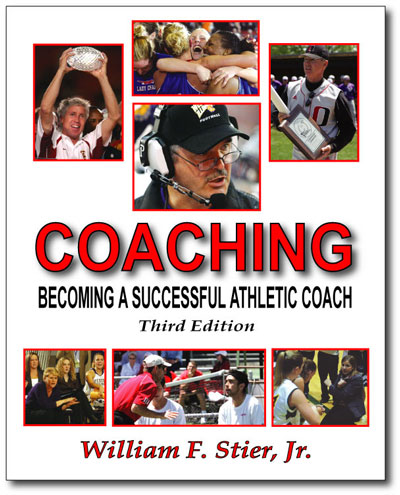
book cover
COACHING: BECOMING A SUCCESSFUL ATHLETIC COACH

purchase button for stier coaching

by WILLIAM F. STIER, JR.
3rd edition, 2010, 700 pages, $69.95

ISBN 978-0-899641-474-7Review button for stier Coaching


PREFACE

Introduction

This is the third edition of the popular book about coaching which was originally titled Successful Coaching: Strategies and Tactics published in 1995 and the second edition titled Coaching Concepts and Strategies published in 1998. The third edition has some significant changes and improvements. These include the addition of numerous new concepts (for a total of 452) with updated and expanded information applicable for the current coaching scene. This information includes additional insights into the challenges facing coaches in today’s ever changing and problematic environment in the 21st century. In addition, questions at the end of each chapter have been revamped where necessary to reflect current and relevant topics. And, finally, there are new research orientated questions at the end of each chapter which ask the reader to conduct surveys, interviews and conduct library research in an effort to gain additional information, trends, and data on a variety of relevant sport and coaching topics.

Coaching: Becoming a Successful Athletic Coach was written from a very practical perspective to provide you, the would-be or current coach, with a realistic insight into the world of coaching amateur sports in the 21st century. The information, suggestions and recommendations presented are based on sound theoretical constructs coupled with the practical experience of the author who was a highly successful junior high, senior high and college coach and athletic director for almost 25 years. The information contained in this book is applicable at all levels of sport competition including youth sports, junior and senior high school teams, as well as the college or university level.

The Scope of the Book

This book is written for current and future coaches irrespective of the sport or sports coached. This is not a "how to" book in coaching a specific sport such as basketball, field hockey, football, softball, or gymnastics, etc. Nor does it deal with the so-called Xs and Os of coaching a specific team or sport. Rather, the book has been written from a generic perspective, that is, the information presented is applicable for the coaching of all sports and at all amateur levels of competition.

The Book's Objectives

The objective of this book is to help the reader become knowledgeable in terms of what it takes to become a successful coach and to develop specific skills which will facilitate and significantly enhance one's competency level in coaching. In essence, this book has been written to help the reader become a more knowledgeable and skilled coach—a more effective, and efficient coach, one who understands the complexity of the varied and multiple tasks facing the modern day mentor.

Unique Features of the Book — Coaching Concepts

Presented throughout the book are 452 Coaching Concepts. These Coaching Concepts are general statements or principles that serve as guidelines for coaches in terms of very specific coaching situations. Each of these concepts or guidelines can serve as a potential focal point of decision making for the athletic coach. These principles and guidelines can also aid the reader in developing a greater depth and breadth of knowledge relative to coaching a competitive sport. Succinctly presented, these principles involve sound coaching strategies and successful teaching tactics that are applicable for both the would-be and current mentors.
Additionally, at the end of each chapter there are two sets of questions for the reader to respond to. The first set of questions for each chapter are general questions that may be addressed from the reading of the chapter. The second set of questions for each chapter involves research questions that the reader must secure the answers to. The answers to these questions can be obtained through surveys, questioning individuals and library/WWW research efforts.


CONTENTS

Chapter 1: Introduction to Sports and the Profession of Coaching

A Global View of Sports (Elite College Coaches Join the Salary Arms Race, Woman Basketball Coaches Join the Salary Arms Race, Youth Sports Participation, High School Sports Participation)
Opportunities for Participation in College Sports (Collegiate Sports Participation)
Final Four (Financial Endowments at the College Level)
Possessing a Realistic View [or Perspective] of Sports (Outside Pressures)
Challenging Questions Facing Sports Today
Goals of the Athletic Program in Schools
Negative or Downside Aspects of Sport Participation
The Value of Sport Participation in Schools
Justification of Sports in Schools
Specific Positive Outcomes of Sport Participation
The Dumb Jock Myth
Additional Advantages of Sport Participation
Schools are Different Today Than They Were in the Not-to Distant Past
Why Youngsters Participate in Sports
Defining the Term "Fun"
Why Youngsters Don't Participate in Sports
Why Girls Quit Athletic Teams 6
Competition for the Athletes' Time
The Coach Seen as the Problem by Youngsters
Milestones in Gender Equity and Discrimination in Sorts
Title IX and Gender Equity
Competitive Sport Opportunities for Women Prior to Title IX
Changes Brought about by Title IX that Affect Coaches
Grove City versus Bell
A Temporary Setback
The Civil Rights Restoration Act
Punitive Damages under Title IX
Three Criteria for Determining Compliance with Title IX
Syracuse University Was the First Institution
To Use the Safe-Harbor Defense in Meeting Title IX
Using Internet-based Surveys
The Elementary and Secondary Education Act
References
Exercises and Researach Questions for Chapter 1

Chapter 2—Developing a Realistic Perspective of Coaching

Coaching is Both a Science and an Art
Volunteer Coaches Versus Paid Coaches
Challenges of Becoming a Coach
Developing a Philosophy of Coaching
An Example of One Public School System
Philosophy of Athletics (Competition)
Ethical Behavior in Sport Competition
Unacceptable Behavior by Coaches
Examples of Questionable Ethical Behavior
Sportsmanship: An Integral Element in Coaching and Sports
Enhancing Ethical Behavior by Coaches
One Conference’s Effort to Combat Inappropriate
Game Behavior by Coaches and Increase Sportsmanship
Different Viewpoints of the Coaching Experience
Drop-out among Coaches as they Get Older
Pros and Cons of Coaching
Positive Aspects Associated with Coaching
Opportunities to Work with Young People
Opportunity to Make a Difference, to Influence Others
The Excitement of the "Chase"
Demonstration of Competence by the Coach
Being Able to Coach Can Aid in Obtaining a Teaching Position
Opportunity for Travel
Opportunity for Developing Personal Friendships,
Relationships and a Special Kind of Camaraderie
Coaching is a Self-Motivating Activity or Involvement
Coaching provides a Change of Pace for the Coach
Opportunity for Career Advancement
Climbing the Ladder of Success as a Coach
Opportunities for Significant Financial Rewards at the Higher Levels of Competition
Opportunity to Build Successful Sport Programs
Opportunity to "Give Back" Something to Sports
Opportunity to Retain Some Association or Some Connection with Sports
Involvement in Sports Keeps a Person Young in Mind and Body
Negative Aspects Associated with Coaching
The Time Factor
Time Commitments for the High School Teacher/Coach
Hardships on the Spouse and Family Members
Unreasonable, Impolite, Violent, and Unsafe/Dangerous
Reactions and Actions of Parents, Fans and Athletes
Racial and Sexual Discrimination
Primary Reasons for the Decline in Women Coaches
Secondary Reasons for the Decline in Women Coaches
Other Reasons for the Decline in Women Coaches
Teacher/Coach Role Conflict
Coaching — Teaching Burnout
Lack of Monetary Rewards
Routine Tasks Involved in Coaching
The Win-Win Syndrome
Outside Pressures
Necessity of Making Tough Decisions
Problems and Disagreements with Administrators Over-burdened with Details, Paper Work and Administrative Tasks
Lack of Job Security
Lack of Control by the Coach
References
Exercises and Research Questions for Chapter 2

Chapter 3—Coaching Opportunities

Coaching Opportunities at Different Levels
Coaching Youth Sports
Beginnings of Formal Sport Competition at the Youth Level
What Parents Think about Youth Sport Programs
Responsibilities of Youth Sport Coaches
Other Non-school Coaching Opportunities
State Games
Coaching in Junior and Senior High Schools —Interscholastic Sports
Competitive Opportunities at the State Level
Coaching in "Farm Systems" versus "Independent Systems"
Coaching in the "Farm System"
Coaching in the "Independent" System
Questions to Consider in Evaluating Possible Coaching Positions
Two Competing National Coaching Organizations
Organization of Interscholastic Sports Competition
Collegiate Coaching
National Governing Bodies for Collegiate Sports
National Collegiate Athletic Association (NCAA)
National Association of Intercollegiate Athletics (NAIA)
National Junior College Athletic Association (NJCAA)
The National Christian College Athletic Association (NCCAA)
The National Small College Athletic Association (NSCAA)
The United States Collegiate Athletic Association (USCAA)
Professional Coaching Opportunities
Number of Professional Leagues/Associations
The Value of Networking within Professional Sports
Challenges Facing the Amateur Coaching Profession
The Problem of a Lack of Qualified Coaches
Shortage of Youth Coaches
Shortage of Interscholastic Coaches
Reasons for the Shortage of Coaches
Tenured Scholastic Teachers Relinquishing their Coaching Duties
Advantages of Being a Full-time Teacher and Coach
The Sad State of Affairs in the Hiring of Coaches
Hiring Priorities
Hiring of Coaches with Questionable Credentials and Skills
References
Exercises and Research Questions for Chapter 3

Chapter 4—Standards and Educational Programs for Coaches

The Problem of a Lack of Proper Education for Coaches
The Cry for Increased Standards for Coaches
Lack of Consensus on Coaching Competencies and Standards
National Council for Accreditation of Coaching Education (NCACE)
State Licensing and Certification Efforts
New York State’s Efforts to Educate and Certify Coaches
Concerns about Hiring Unqualified Coaches
What Schools are Looking for in Hiring a Coach
Competencies Needed by Athletic Coaches
Recognized Strengths of Coaches
Educational Opportunities for Coaches and Future Coaches
Pre-service Education Experiences
In-service Training and Educational Opportunities
Problems with Certification and Increased Standards
Contents of College Level Educational Programs for Coaches
Training Programs and Coaching Standards for Youth and Interscholastic Sports
Existing Coaching Education and Certification Efforts and Programs
Institute for the Study of Youth Sports
Program for Athletic Coaching Education (PACE)
Indiana's Center for Coaching Education (CCE) and PACE
National Youth Sports Coaches Association NYSCA
Youth Sports Coalition of the National Association for Sport and Physical Education
American Sport Education Program—ASEP
A New Coaching Education Program on the Interscholastic Level
Canadian National Coaching Certification Program CNCCP
Other Youth Sport Organizations — Local, State,Regional
National High School Athletic Coaches Association (NHSACA)
Current State of Affairs of Coaching Education and Certification
References
Exercises and Research Questions for Chapter 4

Chapter 5—Being a Successful Coach

Everyone Wants to be a Winner
Being Successful as a Coach Means More than Merely Winning
The Coach Who Was an Elite Athlete
Factors Affecting Coaching Performance
The Job Itself
The Setting or Circumstances of the Specific Situation
The Story of the Four Envelopes
The Characteristics and Qualities of the Individual Coach
Additional Considerations in Being a Successful Coach
Processes of Coaching
Planning
Prioritizing
Organizing
Staffing
Directing
Coordinating
Reporting
Recording
Facilitating
Evaluating
Budgeting
Coaching Skills and Competencies
Coaching without All of the Tools
The Renaissance Coach
Categories of Competencies
Basic Competencies
Technical Competencies
Interpersonal Competencies
Conceptual Competencies
Adaptability Competencies
Leadership Competencies
Dedication Competencies
Image Competencies
Professional Competencies
Vision Competencies
General Obligations and Responsibilities of Coaches
The Coach as a Problem Solver
Types and Sources of Problems
The Coach as a Motivator and Manager of Human Behavior
The Coach as a Communicator
The Coach as a Delegator
The Coach as a Disciplinarian
The Coach as a Risk Taker
The Coach as a Decision Maker
Subjective Rational for Decisions
Objective Rational for Decisions
The Use of Both Subjective and Objective Judgment
The Coach as a Counselor
The Coach as a Teacher
Teaching for Competency in the Psychomotor,
Affective and Cognitive Domains
The Three Domains of Learning
The Coach as a Recruiter
Specific Tasks and Obligations of Coaches
Areas of Knowledge Applicable to the Coach
Identifiable Coaching Styles
The Authoritarian or Autocratic Coach
The Dictator
The Benevolent Dictator
The Humanistic Coach
The Democratic Coach
Laissez-faire or Permissive Coaching Style
References
Exercises and Research Questions for Chapter 5

Chapter 6—Coaching is a People Business

The "Secrets" of Coaching
Technical versus the Interpersonal Aspects of Coaching
Understanding the Work Ethic in Coaching
Coaching and Working on Task
Mere Effort versus Results — Quantity versus Quality
Stressors, Pressures and Burnout
Possible Symptoms of Extreme Stress and Burnout
Coping Strategies in Overcoming or Combating Stress and Pressure on the Job
Determining when One Should Continue to Coach or to Leave the Profession
Being Successful as a Coach
Being Evaluated as a Coach
Pressures and Perceptions of Pressures on Coaches
Developing Positive Working Relationships
Essentials of a Successful Athletic Program
Working with Athletes
Athletes Serve as Public Relations Conduits
How Athletes Perceive Coaches
Positive Characteristics and Behavioral Activities of Coaches
Working with Parents
Strategies to Establish Good Relations with Parents
Meeting Parents — on an Individual Basis
Scheduling a Pre-season Mass Meeting with Parents of Athletes
A Success Story Involving a Pre-season Meeting between Parents, Athletes and Coaches
Creating Team Newsletters for Parents and Team
Periodically Making a Personal Phone Call to a Parent or Taking
Time to Speak to a Parent when the Opportunity Presents Itself
Conducting Periodic Open Forums for Parents, Athletes and Fan
End-of-Year Athletic Banquet for the Team
Working with Athletic and School Administrators
The Importance of the Chain of Command
School's Support Staff and Professional Staff
Custodians, Grounds Keepers, and Bus Drivers
Secretarial Staff
Working with the Team Physician, Physician Assistant, School Nurse,
Sports Medicine Trainers (NATA) and Physical Therapists
Functions of an Athletic Trainer
Working with Other Coaches, Teachers, and
Community Members Building Relationships
Working with One's Own Head Coach 5
Working with One's Own Assistant Coach(es)
An Exemplary Example of Professionalism by a Head Coach
Working with Team Captains
Designated Captains for the Week or Multiple Captains
Working with Student Managers and Statisticians
Student Managers and Statisticians
are neither Maids nor Servants
Working with the Sports Information Director (SID)
Working with News Media Representatives
Working with Other Coaches within the School
A Generous Coach Helps Others
Working with Coaches at Other Schools
Working with Teachers within the School
Working with Academic Advisers and Tutors
Proper Utilization of Academic Advisers and Tutors
Working with Cheerleaders, Pom Pom Groups and Advisers
Cheerleading as a Flagship Sport or Activity
Working with the Band and the Musical/Band Director
Working with Officials
Working with College Coaches Seeking Recruits
Working with Fans, the Community and Booster Clubs
Working with Salespersons
Developing a Positive Relationship with One's
Own Spouse and Children
References
Exercises and Research Questions for Chapter 6

Chapter 7—Coaching Successful Teams

Fourteen Elements of a Winning Team
Better Skilled Athletes
Better Teaching and Coaching of Sport Skills in Practice
Better Team and Player Selection
Suitable and Wise Placement of Players in Suitable Roles
More Effective Recruitment and Retention of Athletes
Better Game Coaching — Superior Bench Coaching
Better Conditioned Athletes
Fewer Injuries among Players
Highly and Better Motivated Athletes
Greater Confidence Exhibited by Athletes
Fewer Mistakes than Opponents
Superior Support Mechanisms, Programs and Systems
Evidence of Superior Support in Terms of Facilities,
Equipment, Supplies, and Staff Personnel
Competing against Weaker Opponents
Developing an Individual Coaching Style
Learning from One's Previous Coaches
An Unacceptable Coaching Tactic
Additional Unacceptable Past Coaching Practices
The Athletic Scene is Different Today
Reasons behind Changes in Competitive Sports
There Exists Numerous Attractive Alternatives for the Potential Athlete
Athletes are Different Today — They Have Different
Needs and Act Differently
Boycotts by Athletes
Athletes' Boycotts at Division III
Athletes' Boycotts at the High School Level
"When I was an Athlete" Syndrome
Athletes are Coming to High School and College with Enhanced
Skill Levels Mastered Earlier in Their Athletic or Sport Careers
Presence of Better Nutritional Practices and Knowledge of Nutrition
Availability of Better Conditioning for Athletes under the Guidance of Coaches — Both in Terms of Physical Training and Sport Psychology
Existence of Better Physicians, Medical Care and Rehabilitation
Programs (NATA Certified Trainers, Physical Therapists
and Physician Assistants)
Greater Availability of Better Equipment and Protective Gear —
Although Misuse of Protective Gear Sometimes Creates a Myth
of Indestructibility Which Can Be a Problem in Itself
Accessibility to Better Audio-Visual Aids and Mechanical Devices by Both Coaching Staffs and Athletes (Video Tape Machines, Caddy-Cams, Assessment and Testing Instruments)
An Increase in and Greater Sophistication of Workshops, Clinics and Camps as Well as Written Materials that Provide Excellent In-service Educational Opportunities for Coaches and Athletes
Greater Specialization by Athletes in One Sport — the Two-Sport or Three-Sport Athlete is Quickly Becoming an Endangered Species
Implementation of Rule Changes as Well as Advances in Strategies,
Training Techniques, and Coaching Tactics
Explaining the "Why" in Coaching
References
Exercises for Chapter 7
Research Questions for Chapter 7

Chapter 8—Coaching Practices, Hints and Strategies

Guarding Against Overemphasis on Winning
Behavioral Expectations of Successful Coaches
Being Viewed as Competent and Successful by Others
Starting Young Players
Presence of Injuries
"Bad" Luck
Superior Opponents — Giving Other Teams Their Just Due
Highlighting Significant Achievements by One's Own Athletes
Indicate by Actions and Words that You Care About Your Players as Individuals and Not Just as Talented Athletes
Who Can Help Win Games
Become Known as an Excellent Teacher of Skills,
Especially Fundamentals
Emphasize the Academic Achievements of Student-Athletes
Stress the Importance of Non-Academic
Achievements of Student-Athletes
Stress the High Level of Competition
Comprising the Team's Schedule
Have Athletes Look Clean Cut, Professional and Neat —Athletes Should Look Like Athletes
Insure that Athletes Exhibit Good Sportsmanship
Make Special Efforts to Insure that Your Student-Athletes
Behave in School and within the Community
Team Rules for the Modern Day Athlete: Establishing and Enforcing Appropriate and Fair Team Rules
Justifications for Rules and Regulations
Coaching Through Intimidation and Fear
Establishment of Rules, Standards of Behavior and Consequences
Punishing Athletes Who Violate Team Rules
References
Exercises and Research Questions for Chapter 8

Chapter 9—Major Challenges and Tasks Facing Coaches

Five Major Areas of Responsibility
Planning Strategies
Planning for the Entire Calendar Year
The Pre-season Practice Time
The In-season (Regular Season) Period of Time
The Post Season Period
The Out-of-Season Months
Recruitment of Athletes
Recruitment and Retention — The Two Essential Components of Having Superior Athletes
Recruiting at the Youth Sport Level
Recruiting at the Junior/Senior High Level
Reasons behind an Athlete's Departure from a Team
Helping High School Athletes Pursue Further Participation at the College Level
Participation Opportunities at the College Level
Recruiting at the College and University Level
Unreasonable Expectations for Athletic
Success at the Elite Levels
Unreasonable Expectations for Athletic Success in Professional Sports
Challenges of High School Athletes Playing in College
Chances for high School Athletes to Compete  in Athletics beyond High School
Unreasonable Expectations by Minority High School Athletes
Actual Success Rate of Black Athletes at the Professional Levels
Distribution of Scholarships at Division I Schools among White and Black Athletes
Importance of Retention Efforts in the Recruitment Process at the College Level
Strategies for Selecting Team Members
Team Selection (Cuts and/or Dismissals)
Examples of Subjective and Objective Criteria
Use of Sociograms in Assessing Athletic Team Members
Evaluating Four Areas of Competency for Team Selection
Physical Size, Physical Presence and Maturity
Essential Attributes and Abilities
Athletic Skills and Competencies
Desire and "Heart"
Selective Classification (Moving
Youngsters Up a Level in Competition)
Conducting or Structuring Tryouts 8
Eliminating the Wanna-bes From Early
Contention as Team Members
Should Non-Starting Seniors be Retained on the Team?
Strategies for Announcing Cuts Following Try-outs
Strategies for Removing Team Members from the Squad
Notifying Individual Athletes That They
Are Kicked Off the Squad
Being a Good Practice Coach
Being a Good Game (Bench) Coach
References
Exercises and Research Questions for Chapter 9

Chapter 10—Components of Successful Practice Sessions

Strategies for Coaching in Practice
Planning Practices by Thinking "Backwards"

Planning for the Pre-season Practices
Sharing Practice Plans with Athletes
Activity Poster Boards
Pre-season Daily Practice Schedule —
Via the Activity Poster Boards
Daily Practice Plans
Securing Accurate Witness Statements for All Accidents
Making Changes in the Planned Practices
Weekly Practice Plans
Monthly Practice Schedules
Planning for the In-Season Practices
Conditioning and Strength Training During In-season
Planning for the Post Season Practices
Components of a Practice Session
Warm-Up Activities
Taking Individual Differences into
Account Doing Warm-up Exercises
Conditioning Activities
Generic and Sport Specific Conditioning Activities
Types of Conditioning Activities
Training principles
Aerobic and Anaerobic Conditioning Activities
Free Weights and the Use of Machines
Questions Coaches Must Answer regarding Conditioning for Their Teams
Introduction of New Information, Knowledge and Skills to be Learned
Using Metaphors, Similes and Analogies for Coaching Instruction
Reinforcement of Previously Taught Skills and Knowledge
Use of Individual and Group Drills
Breaking Down a Skill into Its Component Parts
An Example of an Individual Game-Like Drill in Practice
Use of Scrimmages or Game-Like Competition
Cool-Down or Concluding Activities
Interpersonal-Interaction Visitation Time between Coaches and Players
Implementation of Risk Management Tactics
Common Reasons for negligence in Athletics
Principles of Supervision (Coalition of Americans to Protect Sports)
References
Exercises and Research Questions for Chapter 10

Chapter 11—Effective Coaching Decisions

Strategic Decisions for Practice Sessions
Conducting Meaningful Practice Sessions
Distributed and Massed Practice Sessions
Edward Thorndike’s Learning Laws
Styles of Teaching or Coaching Physical Skills
to Male and Female Athletes
Coaching Male and/or Female Athletes
Does the Sex of the Coach Make a Difference?
Cross Gender Coaching
Characteristics of Productive Practices
Presentation of Skills within Practices — Coaching Methods
Whole Method of Teaching/Coaching
Whole-Part-Whole Method of Teaching/Coaching
Enhancing Athletic Improvement in Practices
Using a Rubric to Help Assess Current Team Members
Mental Aspect [Mental Skills Training] of Coaching
Introduction of New Skills and Knowledge — Readiness of Athletes
Length of Individual Practice Sessions — Effective Time Management
Problems with Long Practices
Hindrances of Learning — Learning Plateaus
Keeping Things in Prospective — Positive Practice Strategies
Motivating Athletes — Psychological Conditioning for Athletes
The Unmotivated Athlete
Unwilling to Pay the Price for Excellence
Intrinsic and Extrinsic Motivation
Gimmicks in Motivation — Fluff versus Substance
Too Much Motivation — The Fallacy of Keying Up Athletes “Sky High”
Specific Motivating Tactics and Techniques
Motivation of Athletes — Carrot or the Stick Approach
Motivation and Fear and Punishment
Fear — an Obstacle to Learning
Motivation — and the Coaching Staff
Handling Mistakes by Athletes
Having Athletes Make Corrections
Types of Feedback
Importance of Feedback in Motivating Athletes
and Preventing/Correcting Mistakes
Use of Audio-Visual Aids and Written Materials
Concluding Practices
Preparing the Team for Competition — Strategic Decisions
Determining the Starting Lineup
Determining Playing Time
Catch-22 Situation — Earning the Right to Be a Starter
Making Intelligent Decisions in Actual Game Situations — Being a Good Game Coach
An Example of Shooting Oneself in the Foot
Knowing the Rules of the Sport
References
Exercises and Research Questions for Chapter 11


Chapter 12—Problem-Solving Strategies for Coaches

Preventing Problems
Steps Involved in Dealing with problems and Challenges
Problems Consume Valuable Resources
Being Distracted by Problems
Timing of Problem-solving Tactics
Reducing the Impact or Fallout of the Problem Situation
The Value of the Athletic Department’s Policy Handbook
Problem Solving is a “People” Job
Six Sources of Problems
Some Problems Can Have Significant and Severe Negative
Impact upon a Coach nd upon the Coach’s Career
The Actions of the Coach can Have Significant Impact on Potential Problems
Problems Take a Measure of the Individual
Problematic Situations to Resolve
Partial List (100) of Problematic Situations Facing the Coach
Exercises and Research Questions for Chapter 12

Chapter 13—Being Successful in the Job Market —
Finding a Coaching Job

How to Go About Getting a Coaching Job
Interscholastic and Collegiate Qualifications for Coaching
Finding Out about Coaching Vacancies
The Shot-Gun Approach to Job Prospecting
The Rifle Approach to Job Prospecting
Presenting an Attractive Application Package
Completing the School's Application Form
The Letter of Application
The Résumé
Establishing the Confidential, Credential File — "Closed" Versus "Open" Files
Phone Calls Made to References by Schools
Obtaining Impressive References
Matching the Candidate with the Appropriate Coaching Position
Realistic Expectations of What Can Be Achieved
Handling the Interview Session
Coaching Candidates Need to be Skillful in Interviewing for Jobs
Presenting a Professional Image during the Interview
Networking
What Networking Is Not
An Example of Maintaining the Integrity of One's Network
Establishing One's Own Network
Evaluating One's Networking Efforts
Mentoring
Securing (and Keeping) Employment as a Coach
Differences between Coaching at the High School Level and in College
High School Coaching versus College Coaching
The Hyprocrisy of Big-Time Athletics
Securing Full-Time Employment  that Includes Coaching Responsibilities
Securing Part-Time Coaching Employment
Problems Associated with Being a Part-Time Coach in a School
Securing that First Real Coaching Job
Being a Leader and a Follower
Securing Subsequent Positions
Another Catch-22 Situation
Examples of Discrimination
Understanding the School's Salary Scale for Teachers and Coaches
Restricting the Number of Years Credited for Outside Teaching Experience
Exceptions to being "Stranded" within a School System as a Teacher/Coach
Climbing the Career Ladder—Types of Coaching Positions to Consider
Graduate Assistantships
Serving as an Assistant Coach
Enhancing One's Marketability as a Teacher (Coach)
Enhancing One's Marketability — Being Certified  to Teach in Two Subject Areas
An Example of a Truly Marketable First-Year High School Teacher/Coach
Securing a Job in College Coaching (Junior Colleges; Small, Medium or Large Four-Year Institutions)
The Challenge of Getting That First Coaching Job in Division I
A Glimpse into Coaching at the Major Division I Level
Cost Cutting Measures within NCAA Division I Institutions
Can Affect Coaching Opportunities and Salaries
Coaching at NCAA Division II Schools
Coaching at Division III Schools
Coaching at the Junior and Community College Level
A Final Word on Being Marketable as a Coach
References
Exercises and Research Questions for Chapter 13

Appendix A National Standards for Sport Coaches (NSSC)
Appendix B Extracurricular and Athletic Activities Code of Conduct
Appendix C Finger Lakes Community College Interscholastic Athletics Head Coach Evaluation Form (NY)
Appendix C-2 Albion Central School (NY) Athletic Coach Performance Evaluation
Appendix C-3 Part 1 Assistant Coach Evaluation
Appendix C-3 Part 2 Head Coach Evaluation Form
Appendix C-3 Part 3 Coach Self-Evaluation
Appendix C-4 Salamanca City Central School District (NY) Coaching Staff Evaluation
Appendix C-5a Lyons Central School District Athletic Dept Head Coach Evaluation Form
Appendix C-5b Lyons Central School District Coach’s Evaluation
Appendix C-5c Lyons Central School District  Interscholastic Coaching Evaluation
Appendix C-5d Lyons Central School District Athletic Department Athlete’s Coach Evaluation Form
Appendix D Individual and Team Basketball Rating Form
Appendix E Athletic Handbook
Appendix F Lafayette High School Athletic Requirements for Earning a Varsity Letter
Appendix G Organization of an Interview Session
Appendix H Actual Average Beginning Teacher Salaries 2002-2003 Estimated 2004
Appendix I A State-by-State Estimate of the Average Salaries of Classroom Teachers (2001-2003 and 2002-2003)
Credits
Index


Coaching: A Problem Solving Approach 2e

A companion book to be used with
Coaching: Becoming a Successful Athletic Coach


A companion book titled: Coaching: A Problem Solving Approach (Second Edition), also available from American Press, Boston, MA, and also written by the author, is recommended to be used in conjunction with Coaching: Becoming a Successful Athletic Coach.

Coaching: A Problem Solving Approach (Second Edition) introduces the reader to methods of preventing and resolving problems faced by coaches as well as a collection of 96 case studies [including questions for discussion and examination] dealing with modern day problems and pertinent challenges that face coaches in the amateur sports world. This problem-solving book enables the reader to “put into practice” some of the coaching theories, information, research and “book learning” to practical use through the examination of various problems presented through the case study approach.


ABOUT THE AUTHOR

Dr. William F. Stier, Jr., a distinguished service professor, is the graduate coordinator of Athletic Administration and directs the coaching certification program and the sports management concentration at the State University of New York at Brockport. He received his Ed.D. from the University of South Dakota and began his coaching career in the junior high schools. On the high school level he has coached cross country, baseball, track and field, and basketball and served as athletic director. At the college level, he coached basketball as well as assumed positions of athletic director and chairperson of Health, Physical Education and Recration in both public and private institutions of higher education. Dr. Stier has authored over 270 scholarly articles and has published sixteen books in sport management, marketing, fundraising and coaching. He presently serves as editor of two scholarly, refereed (blind review) professional journals: The Physical Educator and the International Journal of Sport Management. He is also currently listed in the marquis Who's Who in American Education, Who's Who in America and Who's Who in International Education and has received numerous honors and awards.




ORDER DIRECT AND SAVE!

Books make great gifts!

Ask your libraries to order books of interest.

Students, professionals, teachers and libraries receive our best discount.