Academic, Professional, Technical, Trade, Research Books & Journals
americanpress@flash.net • 617-247-0022 • 75 State Street #100 • Boston, MA 02109
Coaching: A Problem Solving Approach
by WILLIAM F. STIER, JR.
2nd edition, 440 pages, $43.95
ISBN 978-0-89641-475-4INTRODUCTION
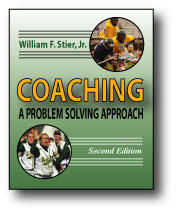
Coaching: A Problem Solving Approach 2nd edition was written specifically for use in undergraduate courses dealing with the preparation of athletic coaches. It is appropriate for coaches of all sports, at all levels of amateur competition. The book can also be most helpful when used in conjunction with the text, Coaching: Becoming a Successful Athletic Coach (3rd edition), also written by the author. In addition, this book is also very useful in Theory of Coaching courses.”
This is a book about problems, specifically, how to recognize problems, how to avoid them, and how to resolve them, all within a sport setting. It is also about how to survive problematic and stressful situations. Most of the problem solving strategies, tactics and techniques suggested in this book are applicable for all levels of amateur sport competition, i.e., youth sports, junior and senior high school levels, and the collegiate or university scene. It is up to the reader to apply and adapt the general concepts and principles that are presented throughout this book to one's own individual situation and circumstances.
SOURCES OF PROBLEMS FOR COACHES
Today, challenges and problems in sports unfortunately seemingly occur in almost every program, and almost on a daily basis. These challenges and problems can involve any number of different individuals, constituencies and groups including, but not limited to, coaches, athletic and central school administrators, athletes, parents, staff, boosters, fans, news media, and members of the community. Successfully handling of such difficulties demands not only a significant amount of time and effort on behalf of coaches but necessitates patience as well as appropriate and timely decision making.
The examples of problems and challenges presented within this book are taken from all aspects of individual and team competitive sports, both on and off the so-called practice and/or playing fields. Some problems are associated with actions (or inactions) by individuals. Some arise because of contrasting philosophies and priorities of individuals and/or groups. Other problems are team related. And still others emanate from the policies, procedures, practices, priorities and philosophy(ies) of the overall sport organization or the sponsoring entity,
UNIQUE FEATURES
The uniqueness of this book revolves around five separate but nevertheless related features or components. The first feature is the inclusion of general information relating to the process of problem solving per se as well as the tasks associated with long range and strategic planning for the prevention and resolution of problems and challenges.
Second, EIGHTY fundamental concepts or general principles are presented which speak specifically to the tasks and responsibilities generally associated with problem solving. These fundamental concepts or principles are presented in chapters one and two as Problem Solving Concepts (PSCs).The third feature which helps make this book unique is the inclusion in chapter three of SEVENTY–THREE specific tactics and hints relating to the problem solving process. These are specific survival strategies that are associated with sound coaching decisions, actions and practices. These Survival Tactics/Hints include practical recommendations, suggestions and schemes based upon sound problem solving principles and concepts as well as the author’s extensive experience as a coach on the junior high, high school and college/university levels. These survival tactics and hints can also frequently provide appropriate and timely guidance, counsel, cautions, and admonishments for the practitioner in terms of decision making and specific actions that should or should not be taken. All of these three unique features are presented within Section I.
The fourth distinctive feature of this book is the inclusion of ninety-six case studies (chapters five through ten). Each case study is based upon one or more specific problems or challenges prevalent in today's amateur sport world. The fifth and final special feature is the inclusion of questions and discussion questions at the end of each case. These series of questions, many of which are unique for each case study, are presented in an effort to assist readers in assessing the specifics of each case and evaluating various courses of action (different scenarios) in light of the circumstances and situations presented. Answering these questions can also aid the reader in planning and creating an individual Strategic Action Plan (SAP) for each of the case studies.
CONTENTS
SECTION I—
INTRODUCTION TO THE PRINCIPLES, PROCESSES AND STATEGIES OF PROBLEM SOLVING
Chapter One: Concepts and Principles of Problem Solving
Chapter Two: The Process and Tasks of Problem Solving
- Chapter Three: Problem Solving Tactics and Survival Strategies
SECTION II—
PROBLEM SOLVING THROUGH THE CASE STUDY METHOD AND STRATEGIES OF PROBLEM SOLVINGSee Coaching: Becoming a Successful Athletic Coach 3rd by William F. Stier, Jr.
Chapter Four: The Use of Case Studies in Problem Solving
Chapter Five: Case Studies Involving Athletic Coaches
Case # 1 The Sneaky Assistant Coach
Case # 2 The Careless Coach
Case # 3 The Newly Appointed Football Coach
Case # 4 The Sneaky Job Applicant
Case # 5 The Very Poor Loser
Case # 6 Being An Assistant Too Long
Case # 7 The Role Conflict
Case # 8 The Overly Optimistic Procrastinator
Case # 9 The Coach Being Taken Advantage Of
Case # 10 The Bad Example
Case # 11 The Coach Who Takes an Impossible Job
Case # 12 The Coach Making Appropriate Practice/Game Decisions
Case # 13 An Effort to Check on the Academic Progress of Athletes
Case # 14 The Underdog Coach with the Potential Mentor
Case # 15 Pay to Play Quandary
Case # 16 Pass to Play DilemmaChapter Six: Case Studies Involving Athletes
Case # 17 The Three Athletic Recruits
Case # 18 The Disobedient Football Player
Case # 19 The Unmotivated Would-be Athlete
Case # 20 The Complaining Athletes
Case # 21 The Misbehaving Students
Case # 22 The Case of the Bad-tempered Athletes
Case # 23 Team Violence
Case # 24 The Prima Donna Athlete
Case # 25 The Carrot and Stick Approach to Motivation
Case # 26 Selecting Captains
Case # 27 Whether Or Not to Start Seniors
Case # 28 Promoting A Potential College Recruit
Case # 29 Offensive Trash Talk
Case # 30 Dealing with Student-Athletes Doing Poorly in the Classroom
Case # 31 Unmotivated Students Trying Out for the Team
Case # 32 The Two O’Clock WonderChapter Seven: Case Studies Involving Other Individuals
Case # 33 The Too Active Booster Club
Case # 34 The Over Involved Booster
Case # 35 The Soccer Publicist and Promoter
Case # 36 The News Media Controversy
Case # 37 The Conflict with the Athletic Trainer
Case # 38 Rumors within the Faculty Lounge
Case # 39 The Delayed Lawsuit by Parents
Case # 40 Communicating with Parents and Boosters
Case # 41 Poor Relationship with the Custodian
Case # 42 The Public Disagreement with One’s Boss
Case # 43 Conflict with the English Teacher
Case # 44 “Why Isn’t My Daughter Playing More?”
Case # 45 Using Student Managers and Statisticians
Case # 46 Working with an Administrator Who Doesn’t Understand Athletics
Case # 47 Obtaining Volunteers to Help with the Team
Case # 48 Training and Motivating statisticians and ManagerChapter Eight: Case Studies Involving Policies, Practices, Procedures, Priorities and Philosophies
Case # 49 The Questionable Equipment Purchases
Case # 50 The Junior Varsity Football Tryout
Case # 51 The Under-funded Sport Program
Case # 52 Specialization versus Generalization
Case # 53 The Questionable Team Selection
Case # 54 The Need for A Student-Athlete Dress Code
Case # 55 The Unsuitable Punishment
Case # 56 The Double Standard for Women
Case # 57 The Need to Recruit at the High School Level
Case # 58 Establishing Team Rules
Case # 59 The Assistant Coach Jumping the Chain of Command
Case # 60 Having Preconditions for Tryouts
Case # 61 The Off-Season Weight Program
Case # 62 The Coach’s Evaluation
Case # 63 The Code of Conduct
Case # 64 Dealing with Determining Criteria for Awards for AthletesChapter Nine: Case Studies Involving Controversial Issues
Case # 65 The Questionable Ethics of the Head Coach
Case # 66 The Hidden Drug Problem
Case # 67 The Righteous Complainer
Case # 68 The Suspected Drug Abuse
Case # 69 The Case of the Superintendent’s Daughter
Case # 70 Cross Gender Coaching
Case # 71 The Accidental Injury
Case # 72 The Diet Disorder
Case # 73 The 8th Grader Being Moved to the Varsity
Case # 74 The Sexually Harassed
Case # 75 The Overly-friendly Coach
Case # 76 The Coach Teaching Unethical Tactics
Case # 77 Title IX Violations
Case # 78 Hazing on the Ice Hockey Team
Case # 79 Specialization versus Generalization of Athletes
Case # 80 Making Substitutes in ContestsChapter Ten: Case Studies Involving Special Situations
Case # 81 The Inappropriate Use of the WWW by Athletes
Case # 82 The Case of the unwanted Cheerleaders
Case # 83 The Case of the Athletic/Coaching Handbook(s) for the “Team”
Case # 84 The Case of Resolving the Dilemma about Awards Banquets
Case # 85 The Case of Dealing with College Recruiters and the Pressure of College Recruitment
Case # 86 Using Technology Intelligently
Case # 87 Inventory Control
Case # 88 Belonging to Professional Organizations
Case # 89 Inadequate Crowd Control
Case # 90 Honoring Former Athletes
Case # 91 Scouting Plans
Case # 92 Developing Practice Plans
Case # 93 Developing and Maintaining a Web Page for One’s Sport
Case # 94 The use of Appropriate Conditioning Methods
Case # 95 The Case of the Need for Nutritional Education for Athletes
Case # 96 Maintaining Adequate Health and Medical ReportsAppendix A: Suggested Readings—Journals and Magazines
Photo Credits
Index
ABOUT THE AUTHOR
Dr. William F. Stier, Jr. is the graduate coordinator of Athletic Administration and directs the coaching certification program and the sports management concentration at the State University of New York at Brockport. He received his Ed.D. from the University of South Dakota and began his coaching career in the junior high schools. On the high school level he has coached cross country, baseball, track and field, and basketball and served as athletic director. At the college level, he coached basketball as well as assumed positions of athletic director and chairperson of Health, Physical Education and Recration in both public and private institutions of higher education. Dr. Stier serves on editorial boards for several professional journals as well as editor for the International Journal of Sport Management. He is also currently listed in the marquis Who's Who in American Education and has received numerous honors and awards.